
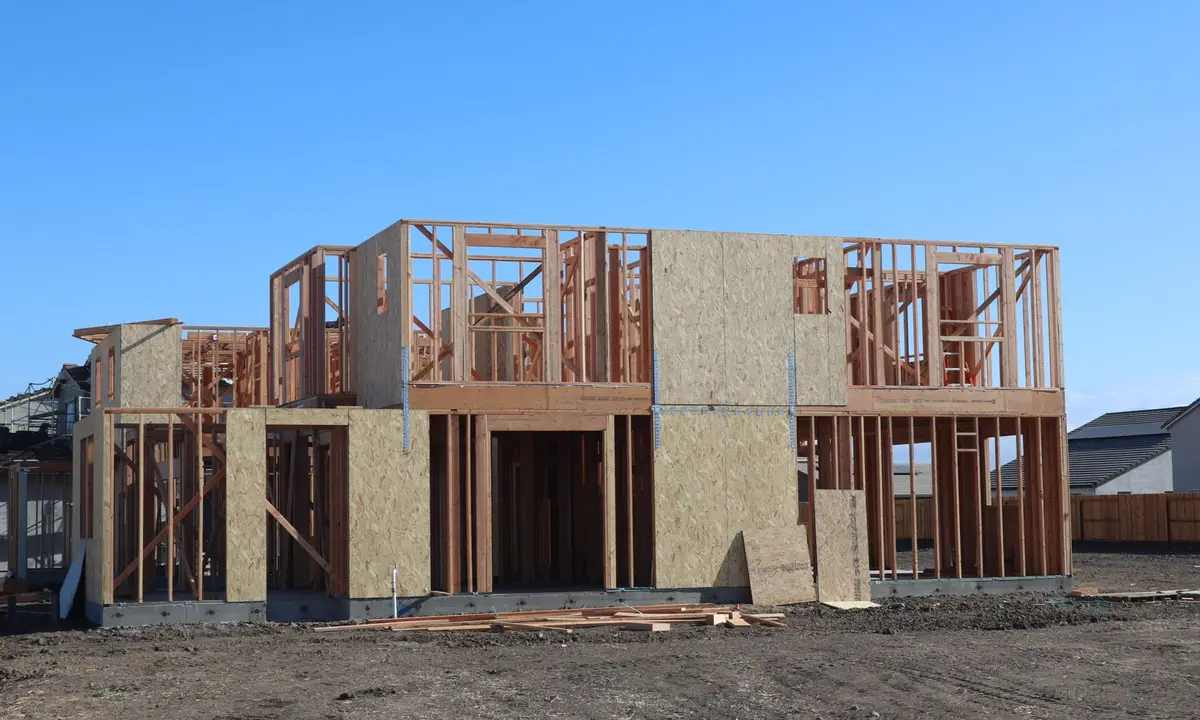
Buyers of newly built homes often see a surprisingly small first property-tax bill, followed a year later by a much larger one, an escrow shortage notice, or an extra bill nobody mentioned at closing. Usually the first bill simply described a lot or a half-built house. What matters is the date your state uses to value property and how it handles a house finished partway through the year.
Why the first bill can be based on the lot
Most assessment systems value property as of a fixed date, usually January 1, and that value carries through the tax year. If the house was still a slab or a frame on that date, the roll can show land only, or land plus a partial improvement value. The bill issued months later still reflects that snapshot. The full house value arrives on the next valuation date, or sooner in states that bill for completion mid-year.
Before you budget, look up the parcel and note three facts: the valuation date the current bill used, whether the record shows an improvement value at all, and the year the record says the house was built or completed.
How several states handle a newly finished house
California: supplemental bills for completed construction
California does not wait for the next annual roll. The Board of Equalization’s supplemental assessment page (opens in a new tab) lists completed new construction and changes in ownership as supplemental events. The assessor values the property as of the event and subtracts the prior roll value. The difference is taxed from the first day of the following month through June 30. An event from January through May produces two supplemental bills, the second covering the next full fiscal year. An event from June through December produces one. A new build can involve both completion and your purchase, and the BOE notes that a series of events can generate several bills.
Timing is unpredictable. The Sacramento County Assessor’s supplemental guide (opens in a new tab) says no statute fixes when supplemental bills issue, and that appraising new construction there can take up to two years. It also says that in Sacramento, mortgage servicers do not receive supplemental bills; they go to the owner. Our California supplemental bill guide covers how to read one.
Texas: January 1 value, and the cap excludes new improvements
The Texas Comptroller’s Property Taxpayer’s Remedies (publication 96-1425) (opens in a new tab) explains that appraisal districts value most property at market value as of January 1. A house unfinished on that date is appraised as it stood. The homestead limitation holds an appraised-value increase to 10 percent of last year’s appraised value plus the market value of new improvements, defined as improvements not included in the prior year’s appraised value. A house finished after last year’s appraisal therefore is not shielded by the cap; the full structure can enter the roll at once. The limitation also takes effect only on January 1 of the year after you first qualify for the homestead exemption.
On the exemption itself, the Comptroller’s property tax exemptions page (opens in a new tab) says an owner who acquires a home after January 1 may receive the general residence homestead exemption for the applicable portion of that year if the previous owner did not receive the same exemption for that year. A builder selling inventory normally would not have, so file Form 50-114 with the appraisal district once you live there. Owners in Houston can reach the appraisal district through our Harris County directory page.
Florida: substantially completed on January 1, or no value
Section 192.042, Florida Statutes (2025) (opens in a new tab), values real property as of January 1. An improvement not substantially completed on that date receives no value. “Substantially completed” means the improvement, or a self-contained unit within it, can be used for its intended purpose. A house finished in February is typically billed as land for that year and enters the roll at full just value the next January 1.
The homestead exemption also turns on January 1. The Department of Revenue’s homestead exemption brochure (PT-113) (opens in a new tab) says you must own the home and make it your permanent residence by January 1, then file Form DR-501 with the county property appraiser by March 1. Under section 193.155 (2025) (opens in a new tab), a homestead is assessed at just value in the first year it receives the exemption. The Save Our Homes limit, the lower of 3 percent or the CPI change, starts the following year. Later additions such as a pool are assessed at just value on the first January 1 after they are substantially completed.
North Carolina: partial improvements and the builder’s exclusion
In North Carolina, Wake County’s builder’s exclusion page (opens in a new tab) notes that the improvement in place on January 1 is what counts, whatever its stage of completion. The page also explains a state program, G.S. 105-277.02. A qualifying builder can exclude from taxation the value added by subdividing land and building a new single-family home or duplex. That lasts only while the builder owns it and for no more than three years. The builder must apply during the January listing period. If your parcel carried this exclusion, the bill before you bought may show little or no house value. Ask the county tax office what value will apply once the parcel is in your name. See our Wake County page for contacts.
New Jersey: partial assessments, then added assessments
New Jersey assesses as of October 1 of the pretax year, and the Division of Taxation’s Handbook for New Jersey Assessors (July 2024) (opens in a new tab) describes what happens to a house completed afterward. A partially finished structure can carry a partial assessment on October 1. Once it is finished, the assessor values it as of the first day of the next month and enters the increase as an added assessment, prorated by the remaining whole months. The added assessment list is filed October 1, and the tax is due November 1. Appeals go to the county board of taxation by December 1 or within 30 days after the collector mails the added bills, whichever is later. Depending on the completion date, the handbook says three bills are possible. Assessments the assessor missed can be picked up later as omitted assessments.
Other states have their own mid-year rules; ask your assessor rather than assuming one of these systems applies.
Estimate the real bill before escrow does it for you
An initial escrow deposit based on the latest actual bill may reflect only the lot. Estimate the finished-home bill yourself, using your county’s published rates and the value the assessor is likely to use once the house is on the roll.
Hypothetical worked example (invented numbers, not a current rate for any place): The lot is assessed at $60,000 and the finished home and lot will be valued at $400,000. Assume a combined rate of 2.0% and no exemptions.
- First bill, land only: $60,000 × 0.020 = $1,200 a year, so the escrow deposit was set near $100 a month.
- Bill once the house is assessed: $400,000 × 0.020 = $8,000 a year, or about $667 a month.
- The gap is $6,800 a year. Depending on when the larger bill is paid, the account can run short well before the next scheduled analysis.
Subtract any exemption you expect before multiplying.
Talking to the servicer about a shortage
Federal Regulation X, 12 CFR 1024.17 (2024 edition) (opens in a new tab), governs escrow analyses. A servicer may hold a cushion of no more than one-sixth of the estimated annual escrow disbursements. If an analysis finds a shortage of at least one month’s escrow payment, the servicer may leave it in place or require repayment in equal monthly installments over at least 12 months; those are its only two options. A smaller shortage may instead be billed for repayment within 30 days.
Send the servicer the new assessment notice or bill as soon as it arrives and ask for an early escrow analysis. Ask whether a supplemental, added, or omitted bill will be paid from escrow or must be paid by you. Get the answer in writing. Our escrow shortage guide walks through reading the analysis statement.
Closing-statement proration pitfalls on new builds
Prorations at closing usually split the current or most recent bill by days of ownership. On a new build, that bill may cover only the lot, so the seller’s credit can be tiny compared with the taxes you will actually owe. Check which bill and value the settlement agent used, and whether the contract allows re-proration once the finished value is known. Also check whether any supplemental, added, or partial-year bill for the builder’s period of ownership has been issued or is still pending, and who is responsible for it. Our proration guide shows how to check the arithmetic.
File your exemption at the first opportunity
Exemption timing depends on the state’s qualification date, not on when you closed. In Florida, owning and living in the home on January 1 is required, so a closing on January 2 pushes the first exemption to the following year. In Texas, an owner who acquires after January 1 may qualify for part of the year. In California, the BOE says a buyer who occupies the home as a principal residence within 90 days of purchase may receive the homeowners’ exemption on a supplemental bill, prorated through June 30. File as soon as the state allows, keep the filing receipt, and confirm the exemption appears on the next notice.
Check the record once the house appears on the roll
When the finished home is first assessed, pull the property record and compare it with your plans and closing documents. Check living area, bedroom and bathroom counts, garage, pool, lot size, year built, and any “percent complete” or partial-value notes left from construction. A record that still shows partial completion or the wrong square footage is a factual error, separate from a disagreement about market value. Our guide to correcting assessment record errors explains how to document and request a fix. Watch the separate appeal deadline printed on your notice.
Sources reviewed October 13, 2026. This guide summarizes rules in selected states; county practices, rates, and deadlines vary, so confirm details with your assessor and tax collector.