
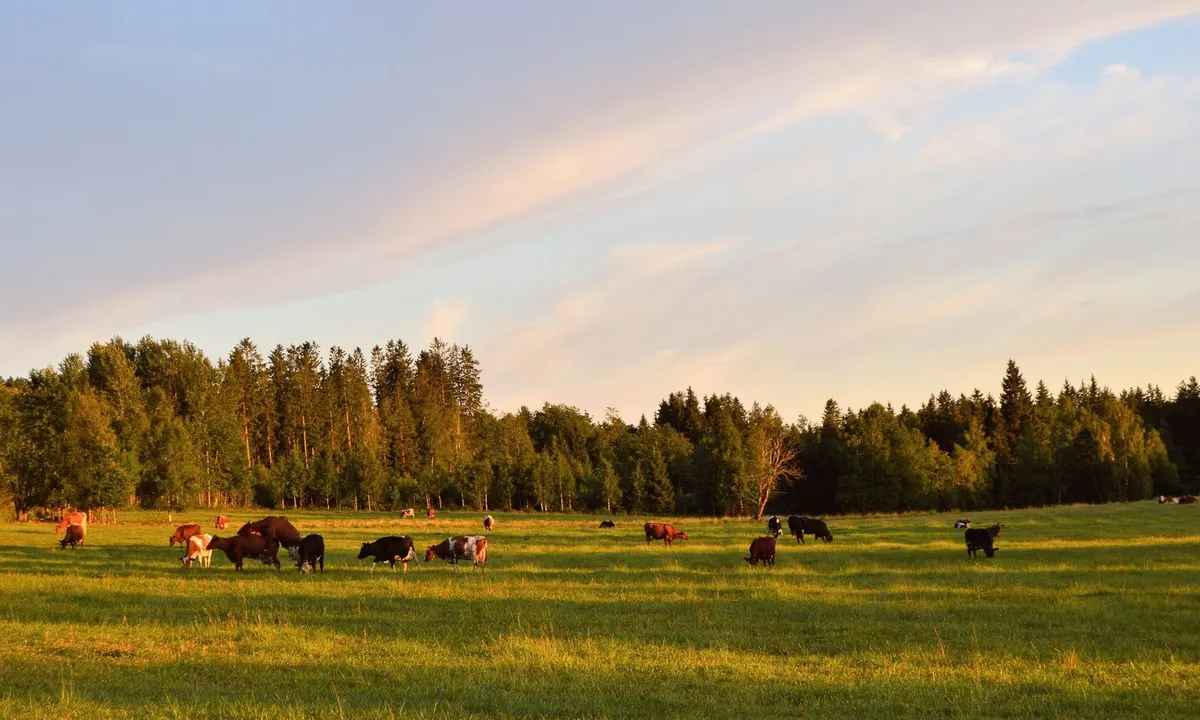
What most people call an “agricultural exemption” or “ag exemption” usually isn’t an exemption. In Texas, Florida, Tennessee, North Carolina, Ohio and most other states, qualifying farm, ranch and timber land is still taxed, but the appraiser values it on what the land can earn from farming instead of what a developer or homebuyer would pay for it. That is called ag valuation, agricultural use valuation, current use, open-space or greenbelt. The gap between the two values is where the savings come from, and it can cut the tax on rural land by 90% or more.
The catch is that the savings come with rules and a payback. You have to apply, prove real agricultural use to the local standard, and in most states repay some of the tax you saved (a rollback or recapture tax) if the land later stops being farmed. This guide explains how the Texas 1-d-1 open-space appraisal works in detail, then compares the major programs in other states, and covers applying, record keeping, leasing, buying land that already has ag valuation, denials and appeals.
The short answer
- It is usually a valuation, not an exemption. The land is taxed on its productivity value instead of market value. The house and the land under it are still taxed at market value.
- You must apply, and the land must really be farmed. Most states require a minimum acreage or income, a history of farm use, or both. Texas has no statewide acreage minimum. Each appraisal district sets “degree of intensity” standards for its area.
- In Texas, file Form 50-129 by April 30. Land must have been in agriculture or timber for five of the last seven years. Once approved, you don’t refile each year unless the owner or the use changes.
- Changing the use triggers a rollback tax. In Texas that is the tax saved in the three prior years, with no interest for 1-d-1 land since 2021. Other states look back two to seven years, and some add interest or penalties.
- Buyers inherit the risk. The rollback is a lien on the land. Check the appraisal record before you buy and settle in the contract who pays if the use changes.
- The Texas Ag/Timber number is a different thing. It is a sales tax exemption on farm purchases from the Comptroller. It does not lower your property tax.
Why an “ag exemption” is really ag valuation
An exemption removes value from the tax roll. A homestead exemption, for example, takes a fixed amount off the value of your home (see our homestead exemption guide). Agricultural programs mostly work differently. They change how the land is valued.
Market value asks what the land would sell for. Productivity or use value asks what the land can earn from its farm use. Texas, for example, values open-space land by capitalizing its average net income from typical lease arrangements over five years, using a capitalization rate of at least 10% (Tax Code §23.53 (opens in a new tab)). Pasture near a growing city might sell for $15,000 an acre but only earn enough from grazing leases to support a productivity value of a few hundred dollars an acre.
A few programs are true exemptions. Michigan exempts qualified agricultural property from up to 18 mills of school operating tax. Pennsylvania school districts use state gaming money to fund a farmstead exclusion on farm buildings where the owner lives (see our Pennsylvania guide). Florida voters will decide on November 3, 2026 whether to exempt farm equipment kept on agricultural land. But for the land itself, almost every state uses a use-value system. To see how market, assessed and taxable value fit together on your record, read assessed vs. market vs. taxable value.
What ag valuation can save: a hypothetical example
The numbers below are invented to show the arithmetic. Your appraisal district publishes its own per-acre productivity values for each land category.
| Hypothetical 40-acre Texas pasture | Without ag valuation | With 1-d-1 ag valuation |
|---|---|---|
| Value per acre | $12,000 market value | $200 productivity value |
| Taxable land value | $480,000 | $8,000 |
| Tax at a 1.8% combined rate | $8,640 a year | $144 a year |
| Yearly difference | $8,496. If the land is later developed, a three-year rollback would be about $25,500 at these numbers. | |
A homesite and house on the same tract are appraised separately at market value. In Texas they can still get the residence homestead exemption, and claiming the homestead does not by itself trigger a rollback (§23.55(i) (opens in a new tab)).
Texas ag valuation: 1-d-1 open-space appraisal
Texas has two agricultural appraisal laws, named after the sections of Article VIII of the Texas Constitution that authorize them. Almost everyone with an “ag exemption” in Texas has 1-d-1 open-space appraisal under Tax Code Chapter 23, Subchapter D (opens in a new tab). The older 1-d agricultural designation under Subchapter C is rare because it is limited to people whose main job and main income is farming. The Texas Comptroller’s agricultural, timberland and wildlife appraisal page (opens in a new tab) links to both applications and the official appraisal manuals.
| Rule | 1-d-1 open-space (Subchapter D) | 1-d agricultural (Subchapter C) |
|---|---|---|
| Who can apply | Any owner: individual, family, LLC, corporation or trust (with limits for some foreign owners) | Individuals only, for whom agriculture is the primary occupation and primary source of income |
| Use history | Agriculture or timber in 5 of the preceding 7 years | Agriculture for the 3 preceding years |
| Intensity | Principal use is agriculture “to the degree of intensity generally accepted in the area” | Used as an occupation or business venture for profit |
| Application | Form 50-129, before May 1. Stays in place until ownership or eligibility changes | Form 50-165, before May 1, every year |
| Rollback trigger | Change of use only. A sale alone does not trigger it | Sale or change to a nonagricultural use |
| Rollback amount | Tax savings for the 3 prior years, no interest | Tax savings for the 3 prior years plus interest at the delinquent-tax rate |
Who qualifies for 1-d-1
Under §23.51 (opens in a new tab), the land must be:
- Devoted principally to agricultural use. If the land has several uses, farming or ranching must be the main one. The Comptroller’s Manual for the Appraisal of Agricultural Land (opens in a new tab) (October 2024) explains that keeping horses mainly for pleasure riding or showing is recreational, not agricultural, while raising, breeding or grazing horses for farm or ranch purposes can qualify.
- Used to the degree of intensity generally accepted in the area. This test screens out token use, such as a few animals on a large tract to get the lower value.
- In agriculture or timber production for five of the preceding seven years. The intensity test applies only to the year you apply and later years, not to the history years. The history belongs to the land, not the owner, so years under a prior owner count.
Land inside city limits must also have been in agriculture continuously for the preceding five years, unless the city doesn’t provide it with services comparable to similar areas of the city (§23.56 (opens in a new tab)).
Qualifying uses include growing crops, hay and fiber, raising livestock, orchards, vineyards and nurseries, raising exotic animals for food or fiber, leaving land idle in a government program or normal rotation, wildlife management and beekeeping. Hunting native deer, harvesting wild plants and processing (bottling, slaughtering, milling) do not count.
Degree of intensity: why there is no single acreage minimum
Texas law sets no statewide minimum acreage for 1-d-1. The Comptroller’s manual tells each chief appraiser to set intensity standards for the commodities in the area: typical stocking rates, fencing, water, hay cuttings, planting and harvesting practices. Most appraisal districts publish these standards with their application. Two examples from published district guidelines:
- Kaufman Central Appraisal District’s 2026 degree-of-intensity guidelines (opens in a new tab) require at least 9 contiguous acres, owned or leased, for grazing, fenced with a water source and enough forage for at least 3 animal units (one cow or horse, or five goats or sheep, is one animal unit), plus one more animal unit for every additional 8 acres. Hay needs at least 9 acres and two cuttings in normal rainfall years.
- Brazoria Central Appraisal District’s 2025 agricultural requirements (opens in a new tab) call for 3 animal units at 1 per 3 acres on improved pasture (9 acres) and 1 per 5 acres on native pasture (15 acres), and set separate standards for hay, orchards, horticulture and beekeeping.
Your district’s standards may be very different, especially in arid West Texas where carrying capacity is far lower. Search for your county on our state directory to find the appraisal district’s website, and look for its ag application packet or “ag guidelines.” Districts also have an agricultural appraisal advisory board of local landowners that advises on these standards.
Wildlife management use (the “wildlife exemption”)
A “wildlife exemption” in Texas is 1-d-1 appraisal based on wildlife management. Land qualifies if it was already appraised as open-space or timber land when the wildlife use began and the owner actively uses at least three of seven practices to sustain a breeding, migrating or wintering population of native wild animals: habitat control, erosion control, predator control, supplemental water, supplemental food, shelters and census counts (§23.51(7) (opens in a new tab)). You can’t use wildlife management to build the five-year history. That must come from traditional agriculture or timber.
You apply on the same Form 50-129, completing its wildlife section, and attach a wildlife management plan on the Texas Parks and Wildlife Department form (opens in a new tab). The Comptroller’s wildlife management guidelines (opens in a new tab) (July 2023) say there is generally no minimum size, but a tract that is smaller than it was on January 1 of the prior year must meet a minimum-acreage “wildlife use requirement” that each district picks from the range Texas Parks and Wildlife sets for its ecoregion. Districts can also require an annual report on the TPWD form. Wildlife land is appraised at the value of the agricultural category it had before conversion, and hunting lease income can’t be counted in its productivity value.
Beekeeping
Keeping bees for pollination or to produce honey or other commercial products is an agricultural use on tracts of at least 5 and no more than 20 acres (§23.51(2) (opens in a new tab)). The district sets the number of hives. Brazoria CAD, for example, asks for 6 colonies on the first 5 acres and one more for each additional 2.5 acres, with a map of hive locations and proof the products are used commercially.
Timber land
Land producing timber can be appraised on its timber productivity under Subchapter E (opens in a new tab) if it is actively devoted to timber “with intent to produce income” to the degree generally accepted in the area, and has been in timber or qualifying agriculture for five of the preceding seven years. The application is Form 50-167 (opens in a new tab), due before May 1. The rollback on timber land is the same as for 1-d-1: three years of tax savings, no interest (§23.76 (opens in a new tab)). Switching between agricultural and timber appraisal does not trigger a rollback.
How to apply for ag valuation in Texas
- Check the property’s history and the district’s standards. Confirm five of the last seven years of farm or timber use and read your appraisal district’s intensity guidelines for your type of operation.
- Get Form 50-129 (opens in a new tab) from the Comptroller or your appraisal district. Many districts post their own version with local instructions.
- Describe the use by year. The form asks for the agricultural category and acres for the current year and back until five of seven years of use are shown, plus livestock head counts, crops, government programs and any nonagricultural uses such as a homesite.
- Attach proof. Districts commonly ask for leases, receipts for livestock, feed and fencing, sale records, photos, Schedule F, and affidavits from prior owners about the history.
- File before May 1 with the appraisal district in each county where the land lies. Do not send it to the Comptroller. The chief appraiser may extend the deadline up to 60 days for good cause.
- Answer any request for more information within 30 days. If you don’t, the application is denied (§23.57 (opens in a new tab)).
Late filing. A late application is accepted until the appraisal review board approves the records, usually in July, but costs a penalty of 10% of the tax difference for that year (§23.541 (opens in a new tab)).
When ownership changes. A new owner normally must file a new application. Since January 1, 2026 (House Bill 1244), ownership is not treated as changed if the land passes to a surviving spouse, or if the new owner uses the land in materially the same way and the same people oversee or carry out that use, such as a tenant rancher who stays on (§23.54(e-1) (opens in a new tab)). If a new application is still needed, the late-filing penalty is waived in two cases (§23.541 (opens in a new tab)). A surviving spouse, surviving child or executor of an owner who died during the prior year can file up to the tax delinquency date. A new owner who keeps the same use with the same people can file up to the later of the delinquency date or the first anniversary of the transfer.
Duty to notify. You must tell the district in writing before May 1 after the land stops qualifying or changes category (for example, from dry cropland to irrigated). Failing to notify brings a 10% penalty on the tax difference for each year the land wrongly kept ag value (§23.54(h) (opens in a new tab)).
The Texas rollback tax under current law
If the use of 1-d-1 land changes to something nonagricultural, an additional tax, commonly called the rollback tax, is due. It equals the difference between the taxes actually imposed and the taxes that would have been imposed at market value for each of the three years before the year of the change (§23.55 (opens in a new tab)).
The rule has changed twice recently. Before September 1, 2019, the rollback reached back five years with 7% annual interest. House Bill 1743 (opens in a new tab) (2019) cut it to three years and 5% interest. House Bill 3833 (opens in a new tab), effective June 15, 2021, removed the interest entirely for 1-d-1 and timber land. The 1-d designation under Subchapter C still adds interest and is still triggered by a sale (§23.46 (opens in a new tab)).
- What counts as a change of use. A physical change, such as building a subdivision or commercial site, or stopping agriculture entirely. The Comptroller’s manual notes that if you keep farming but fall below the intensity standard, you can lose the ag value without a rollback.
- Partial changes. If only part of a tract changes, the rollback applies only to that part.
- Exceptions. No rollback applies to a sale for right-of-way, condemnation, transfer to a government for public use, conversion to timber, or certain conversions by religious, charitable, school and cemetery organizations.
- Lien and due date. A tax lien attaches on the date the use changes. The bill becomes delinquent if not paid before the February 1 that is at least 20 days after it is delivered. After that, normal penalties and interest apply.
- Notice and protest. The chief appraiser must send a written determination, and you have 30 days after delivery to protest it to the appraisal review board.
The Ag/Timber number is a sales tax exemption
The Texas agricultural and timber registration number, or Ag/Timber number, lets producers buy fertilizers and pesticides, fencing materials, qualifying farm machinery and equipment and certain other items without paying sales tax. (Feed and food-crop seed are exempt for everyone, with no number needed.) It is issued by the Comptroller, not the appraisal district, and has nothing to do with property tax. You can have ag valuation without an Ag/Timber number, and the reverse. Numbers must be renewed every four years. Current numbers expire December 31, 2027. Wildlife management, hunting operations and pleasure horses don’t qualify for an Ag/Timber number even though wildlife land can get 1-d-1 property appraisal. Details are on the Comptroller’s Ag/Timber exemption page (opens in a new tab).
Agricultural use valuation by state
Every state has some form of preferential assessment for farmland, but the programs differ in three ways that matter most to owners: the minimum size or income, whether you must apply (and how often), and what you owe when the land leaves the program. We checked each program below against the state statute or the state tax agency in October 2026. Counties often add their own standards, so confirm with the local office before you rely on a figure.
| State and program | Minimum size, income or history | Where and when to apply | If the land leaves the program |
|---|---|---|---|
| Texas: 1-d-1 open-space and timber appraisal | No statewide minimum. Local intensity standards; 5 of 7 years of farm or timber use | Appraisal district, Form 50-129 or 50-167, before May 1. Refile only when ownership or use changes | Tax savings for the 3 prior years, no interest |
| Florida: agricultural classification (greenbelt), §193.461 (opens in a new tab) | No minimum acreage. Must be “good faith commercial agricultural use” | Property appraiser, Form DR-482, by March 1. Annual unless the county waives refiling | No rollback in §193.461. Land is reclassified at just value from then on |
| Georgia: Conservation Use Valuation (CUVA), O.C.G.A. §48-5-7.4 (opens in a new tab) | No set minimum, but tracts under 10 acres need extra proof. 2,000-acre limit per owner. 10-year covenant | County board of tax assessors, by the county’s return deadline | Breach penalty: twice the tax savings for every year of the covenant so far, with interest if not paid on time |
| Tennessee: greenbelt (Agricultural, Forest and Open Space Land Act), T.C.A. §67-5-1001 (opens in a new tab) | Agricultural 15 acres (or tracts of 15 and 10). Forest 15 acres under sustained-yield management. Open space 3 acres in a designated area. 3,000-acre limit per jurisdiction | County assessor by March 15. Refile only when ownership changes | Tax savings for 3 prior years (agricultural, forest) or 5 years (open space) |
| North Carolina: present-use value, G.S. §105-277.2 (opens in a new tab) | Agricultural 10 acres in production, horticultural 5, forest 20 with a plan. $1,000 average gross income (agricultural, horticultural). Owner residence or 4 years of ownership | County assessor during the January listing period, or within 30 days of a value-change notice. New owners continuing PUV: within 60 days of transfer | Deferred taxes for the current year and 3 prior years, plus interest |
| Virginia: land use assessment, Va. Code §58.1-3230 (opens in a new tab) | Local option. Agricultural and horticultural 5 acres, forest 20, open space 5 (lower where allowed by ordinance). State production standards | Local assessing officer at least 60 days before the tax year (30 days after notice in a reassessment year) | Rollback for the 5 most recent years plus the current year, with simple interest set locally (§58.1-3237 (opens in a new tab)) |
| California: Williamson Act, Gov. Code §51200 | Preserves generally 100 acres; contract parcels presumed adequate at 10 acres (prime) or 40 acres (non-prime). Rules set by each county | County or city, under its own Williamson Act rules and deadlines. 10-year contract that renews every year | Nonrenewal phases taxes up over the remaining 9 years. Cancellation fee 12.5% of unrestricted market value |
| Pennsylvania: Clean and Green (opens in a new tab) (Act 319 of 1974) | 10 contiguous acres or $2,000 anticipated yearly gross farm income. 3 prior years of agricultural use | County assessment office by June 1 for the next tax year. No reapplication | Rollback for up to 7 years plus 6% simple interest a year |
| New York: agricultural assessment (opens in a new tab), Ag. & Markets Law §305 | 7 acres and $10,000 average gross sales (or under 7 acres and $50,000). Farmed the prior 2 years | Local assessor, Form RP-305, by the taxable status date (usually March 1). Every year | Inside an agricultural district, converting within 5 years costs 5 times the last year’s savings plus 6% compound interest; outside a district, 8 years |
| New Jersey: Farmland Assessment Act (opens in a new tab) | 5 acres plus $1,000 gross sales ($5 per acre above 5). Woodland under an approved plan: $500 plus 50 cents per acre. 2 years of prior use | Municipal tax assessor, Form FA-1, by August 1 of the pre-tax year. Every year | Rollback for the year of change plus the 2 prior years |
| Ohio: Current Agricultural Use Value (CAUV) (opens in a new tab) | 10 acres in commercial agriculture or $2,500 average gross income. 3 prior years | County auditor. Renewal due every year by the first Monday in March | Recoupment of the tax savings for the prior 3 years. Converting part of a tract for an energy facility, such as solar, is exempt |
| Indiana: agricultural land assessment (opens in a new tab) | No acreage minimum. Statewide base rate ($2,120 an acre for 2026 pay 2027) adjusted by soil productivity | Automatic while the land is in agricultural use | Assessed as agricultural only while in agricultural use. Farmland taxes are capped at 2% of gross value |
| Michigan: qualified agricultural property exemption from up to 18 school operating mills, MCL 211.7ee | Classified agricultural, or over 50% of the acreage in agricultural use. No acreage or income test | Automatic for agricultural class. Otherwise Form 2599 to the local unit by May 1 | File a rescission within 90 days of stopping agricultural use. Recapture applies if a buyer avoided uncapping |
| Illinois: farmland assessment (opens in a new tab), 35 ILCS 200/10-110 | Farmed for the prior 2 years. Cropland assessed on soil productivity using state-certified values | Handled by the county assessor; no state application form | No rollback program identified. Ask the county assessor |
| Oklahoma: agricultural use value, 68 O.S. §2817 (opens in a new tab) | No statutory acreage, income or history test. Farmland value growth capped at 3% a year | County assessor; some counties use a land-use statement | Reassessed for the new use the next January 1; no retroactive charge in the statute |
| South Carolina: agricultural use value, §12-43-220(d) (opens in a new tab) | 10 acres (5 for timber), or smaller tracts with $1,000 gross farm income in 3 of 5 years. 4% assessment ratio for individual owners (6% for most corporations) | County assessor by the first penalty date of the first year. No refiling while use and owner stay the same | Rollback for the year of change plus 3 prior years |
Notes on the biggest differences
- Little or no payback. Florida’s greenbelt law and Oklahoma’s use-value statute have no rollback: converted land is simply valued at market value from then on. Indiana and Illinois value farmland by use automatically, and we found no state rollback for either. Florida’s separate conservation easement program under §193.501 does recapture deferred taxes.
- Covenant and contract states. Georgia CUVA and California’s Williamson Act are contracts. The penalty is for breaking the agreement early, not just for changing use, and Georgia’s penalty covers the whole tract. A Georgia buyer can continue the seller’s covenant by filing in the year after the transfer.
- Long look-backs. Pennsylvania’s rollback reaches back up to seven years with interest. New York charges five times the last year’s savings with compound interest. Virginia looks back five years plus the current year. These can be large on land near growing towns.
- Changes on the ballot and in the legislature. On November 3, 2026, Georgia voters will decide whether to raise the CUVA limit from 2,000 to 4,000 acres starting January 1, 2027, Florida voters will decide whether to exempt farm equipment and other personal property used on agricultural land, and Oklahoma’s SQ 847 would lower the annual cap on farmland value growth from 3% to 1.75% starting with tax year 2027. See our November 2026 ballot measures guide. New Jersey’s 2026 law (P.L.2025, c.274) requires the minimum sales thresholds to be reviewed and adjusted every three years and adds an on-site inspection at least every three years, so the $1,000 figure may change.
Because ag values are already low, assessment caps matter less for farmland than for homes, but some states cap farmland too. Oklahoma limits yearly growth in farmland value to 3%, and Indiana caps farmland taxes at 2% of gross assessed value. Our assessment caps by state guide has the full list.
How to apply for ag valuation in any state
- Find the right office. Ag valuation is handled by whoever values property locally: the appraisal district in Texas, the property appraiser in Florida, the county assessor in most states, the county auditor in Ohio, the township or city assessor in Michigan, the municipal assessor in New Jersey, and the city or town assessor in New York. Our state directory lists the official office for every county.
- Get the program rules for your county. Read the state statute or revenue department guide, then the county’s own standards. Many counties publish minimum stocking rates, income proof requirements or management plan rules that go beyond the statute.
- Check the deadline. They range from March 1 (Florida and New York’s usual taxable status date) and March 15 (Tennessee) to May 1 (Texas) and June 1 (Pennsylvania), with New Jersey’s August 1 deadline for the following tax year. Missing it usually costs a full year.
- Fill out the official form completely. List each use by acreage, separate out the homesite and any nonfarm use, and sign under penalty of perjury where required.
- Attach evidence and keep copies. Leases, sales receipts, tax schedules, management plans and photos. Ask for a stamped copy or emailed confirmation of filing.
- Respond fast to follow-up requests. Many offices deny applications when requested information arrives late.
- Check your next notice of value. The notice or record should show both the market value and the lower use value. If it doesn’t, call the office before the appeal deadline.
Records to keep
The burden of proof is on the owner. Keep these for at least as long as the rollback or recapture period in your state, and longer if you plan to sell:
- Copies of every application, approval letter and notice of value showing the ag or use value.
- Written leases with any farmer, rancher or beekeeper, signed by both sides, showing acres, term, rent and who maintains fences and water.
- Receipts for livestock, feed, hay, seed, fertilizer, fencing, equipment and veterinary care.
- Sales records: sale barn tickets, grain elevator receipts, hay or honey sales, timber sale contracts.
- Federal Schedule F or partnership returns, if you file them, and any USDA Farm Service Agency or conservation program contracts.
- Head counts and dates, hay cuttings and yields, and a simple map of what is grown or grazed where.
- For wildlife or forest programs: the management plan, the annual reports you filed, and dated photos of the work done.
- For history you didn’t create: affidavits or records from prior owners or tenants showing use in earlier years.
Leasing your land to a farmer or rancher
You don’t have to farm the land yourself in most states. Texas 1-d-1 looks at how the land is used, not who uses it, so leasing to a rancher who runs cattle to the local standard qualifies. The Comptroller’s manual also says the owner doesn’t need farming to be a primary occupation or a business for profit. Other states add owner-side rules. North Carolina’s present-use program, for example, requires that the land be the owner’s residence or that the owner (or a relative) has owned it for four full years, and Georgia limits which kinds of owners can sign a conservation use covenant. Check your state’s rules before relying on a tenant.
To make a lease hold up at the appraisal office:
- Put it in writing and get both signatures. Some districts reject unsigned or electronically signed leases.
- Match the lease to the local standard. If the district requires 1 animal unit per 5 acres, the lease should allow, and the tenant should actually run, at least that many.
- Describe responsibilities. Who fences, provides water, fertilizes and maintains the land.
- Watch for gaps. If the tenant leaves and nobody replaces them, the land may no longer qualify. In Texas, if you stop agricultural use entirely, that can be a change of use and trigger the rollback.
- Hunting leases are fine alongside ag use if agriculture remains the main use. In Texas, hunting lease income is counted in the productivity value of agricultural land but not of wildlife management land.
Buying land with ag valuation
Rural land listings often advertise “ag exempt.” That tells you the seller’s tax, not yours. Before you buy:
- Look up the appraisal record. Find the parcel on the county’s official property search and note both the market value and the ag or productivity value, and which program applies. A Texas record usually shows “1-d-1,” “AG,” “open space” or “timber.” Our guide to the property record card explains where these codes appear. Our guide to estimating property taxes before you buy explains how to rebuild a tax estimate from the record.
- Calculate the rollback exposure. In Texas, ask the tax office for an estimate of the additional tax if the use changed now. For a borrower, the tax assessor must compute it on request and may charge a reasonable fee (§23.58 (opens in a new tab)).
- Plan how you will keep qualifying. Will you graze, cut hay, keep bees, lease to a neighbor or convert to wildlife management? Check the district’s standards for that use before closing.
- Refile on time. In most states, the buyer must file a new application. Texas buyers usually must file a new Form 50-129 before May 1 of the next tax year, unless the 2026 “same use, same people” rule applies.
Who pays the rollback at closing?
That is decided by the contract, and the default often surprises buyers. In Texas, the TREC Farm and Ranch Contract (TREC No. 25-17) (opens in a new tab), paragraph 13B, says that if the sale or the buyer’s use after closing results in rollback taxes for periods before closing, they are the buyer’s obligation. If they result from the seller’s use or change in use before closing, they are the seller’s. That obligation survives closing.
Texas sellers of vacant land must include a bold notice in the contract warning that the buyer may not qualify for the special appraisal and that a transfer or change of use may bring additional taxes, unless the contract separately says who pays them. If the seller leaves out that notice, the buyer can recover from the seller any additional taxes and interest caused by the transfer or by a change of use within five years after it (Property Code §5.010 (opens in a new tab)).
Remember that 1-d-1 rollback is triggered by the change of use, not the sale. A builder who buys a pasture and starts grading lots owes the rollback for the three prior years, even though the seller enjoyed the savings. Price that into the offer. Rollback liability is also a lien on the land, so title companies look for it (see how to check for liens on a property). Ask yours to confirm the status on the tax certificate. The ordinary proration of current-year taxes is separate. See property tax prorations at closing.
Why ag valuation applications get denied
- Not enough history. Texas needs five of the last seven years of agriculture or timber. Recently cleared, subdivided or residential land usually doesn’t have it.
- Below the local intensity standard. Too few animal units for the acreage, one hay cutting where two are typical, or a hayfield that is mostly brush.
- Too small or not contiguous. In states with acreage minimums, the homesite and wooded or non-farm acres are subtracted first. A 10-acre parcel with a 1-acre homesite may no longer reach a 10-acre test.
- Not enough income. States such as New Jersey, New York, North Carolina and Ohio have gross sales or income tests. Proof is often needed for each year.
- Recreation, not agriculture. Pleasure horses, hobby animals, deer hunting on native land and “ranchettes” are common denials.
- Missed deadline or new owner didn’t refile. The buyer assumed the seller’s ag status carried over.
- No response to a request for more information. In Texas, the clock is 30 days.
- Wildlife plan problems. Fewer than three qualifying practices, a plan not on the state form, or missing annual reports when the district requires them.
How to appeal a denial or rollback
In Texas, the chief appraiser must send a written denial within five days that explains each reason and how to protest. A denial of 1-d-1 or timber appraisal is protestable to the appraisal review board (§41.41 (opens in a new tab)). File by the deadline the notice gives. The general Texas protest deadline is May 15 or 30 days after a notice is delivered, whichever is later. A change-of-use (rollback) determination must be protested within 30 days after the notice is delivered (§41.44 (opens in a new tab)). You can also protest the ag value itself. The hearing process, evidence requests and options after the board’s order are covered in our Texas property tax protest guide.
Elsewhere, appeals usually go to the county board of equalization, board of review, value adjustment board or county tax board, often with a short deadline after the denial notice. Bring the same evidence you’d use to apply: leases, receipts, sales records, photos and the county’s published standards, showing how you meet each one. For a general walk-through, see how to appeal a property tax assessment. For a large rollback or a disputed change of use, consider a property tax consultant or attorney.
Frequently asked questions
How many acres do you need for an ag exemption in Texas?
There is no statewide minimum, except 5 to 20 acres for beekeeping. Each appraisal district sets degree-of-intensity standards for its area. The two districts cited above expect 9 to 15 acres for grazing. Where pasture is sparse and each animal needs more land, expect higher acreage standards. Call the district or read its ag guidelines before you buy or apply.
Is ag valuation the same as an agricultural exemption?
Usually no. Most states, including Texas, keep farmland on the tax roll but value it on its farm productivity instead of market value. True agricultural exemptions do exist for some things, such as Michigan’s exemption from school operating mills or exemptions for farm machinery in some states, but “ag exemption” on land is almost always a special valuation.
What is the rollback tax on agricultural land in Texas?
For 1-d-1 open-space and timber land, it is the difference between the tax paid at ag value and the tax that would have been paid at market value for each of the three years before the year the use changes. Since June 15, 2021, there is no interest unless the rollback bill itself becomes delinquent. Older 1-d designations still owe interest and are also triggered by a sale.
Does selling land with ag valuation trigger the rollback?
Not in Texas for 1-d-1 land. A rollback is due only when the use changes. But the buyer must usually refile, and if the buyer stops farming or develops the land, the buyer owes the rollback for the three prior years. In other states, check the statute: some programs treat a sale or a split differently, and Georgia’s covenant must be continued by the buyer to avoid a breach penalty.
Can I get a wildlife exemption on land that never had ag valuation?
Generally no. In Texas, wildlife management use is available only for land that was already appraised as open-space or timber land when the wildlife use began. Land that never had ag value must first build the five-of-seven-year history with traditional agriculture or timber and qualify. The exceptions are land protected under certain federal endangered species permits or used for projects that compensate for natural resource damages under certain federal and state environmental laws.
Do I have to reapply for ag valuation every year?
In Texas, not for 1-d-1 or timber. Once approved, the appraisal stays in place until the owner or the eligibility changes, although the district can ask you to file a new application to confirm eligibility. The rare 1-d designation must be filed every year. Other states vary: Ohio requires a renewal each year, Pennsylvania and Tennessee approvals carry forward, and New York and New Jersey require new filings each year.
Does vacant land qualify for lower property tax?
Not just because it is vacant. Vacant land is taxed at market value unless it qualifies for a program such as agricultural, timber, wildlife or open-space valuation, or a conservation easement program. If you own unused rural acreage, leasing it for grazing or hay, or putting it under a forest or wildlife plan, may make it eligible after it meets the history and intensity rules.
Ready to apply? Find your county for the official appraisal district or assessor website, then look for the agricultural or open-space application and the local standards before the deadline.